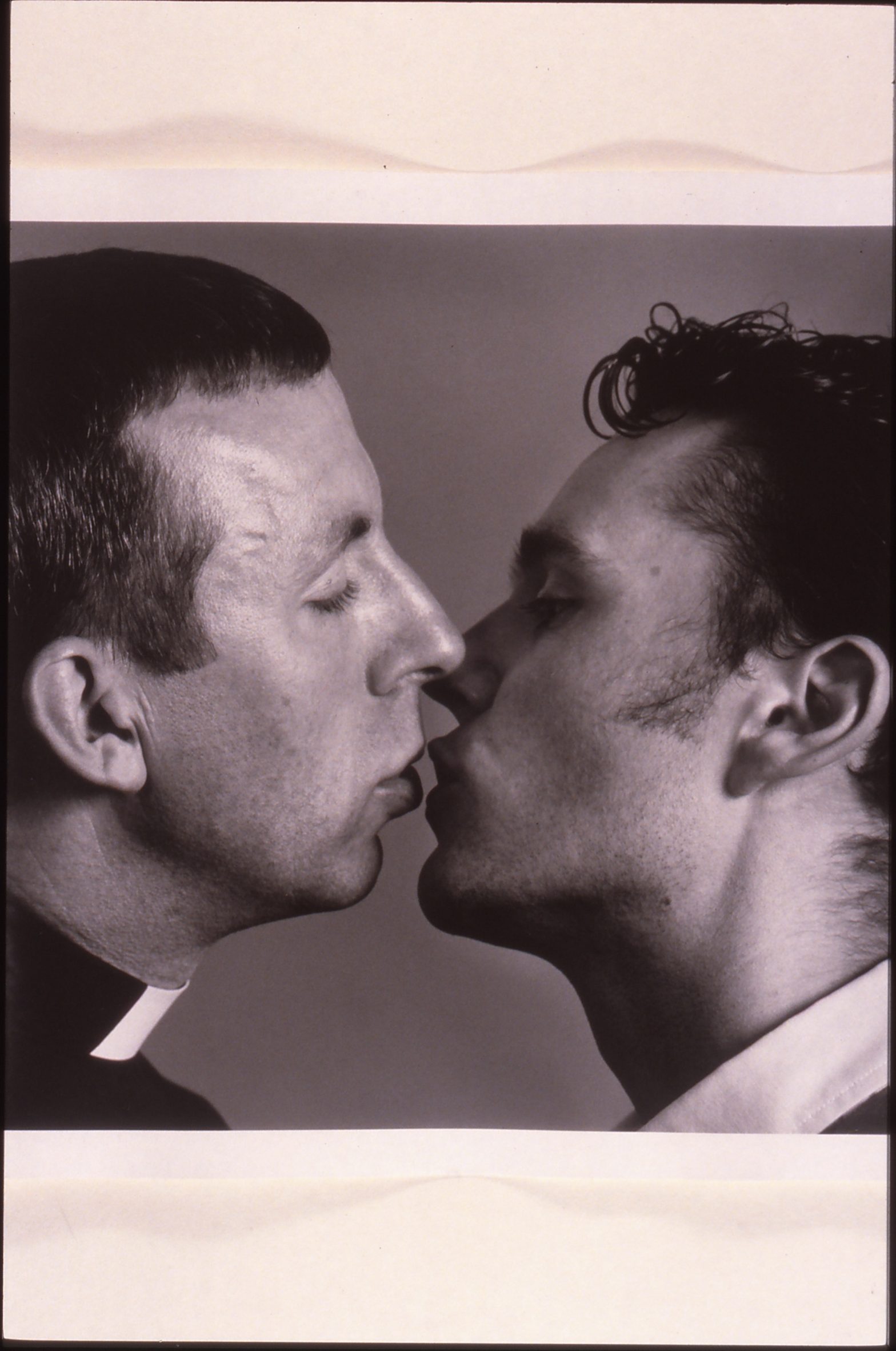
Art does not exist in isolation. It is shaped by the social and political conditions of its time, and in turn can shape how those conditions are understood.
As part of its 60th anniversary programme, Modern Art Oxford is revisiting moments from its archive. For the month of February we are looking at how art responds to social and political change. Spanning three decades, these exhibitions show how art can connect global events to local experience, offering new ways of seeing and understanding the world.
Together, they suggest that art is not only a reflection of society, but an active participant in it.
Art can expose hidden systems of power
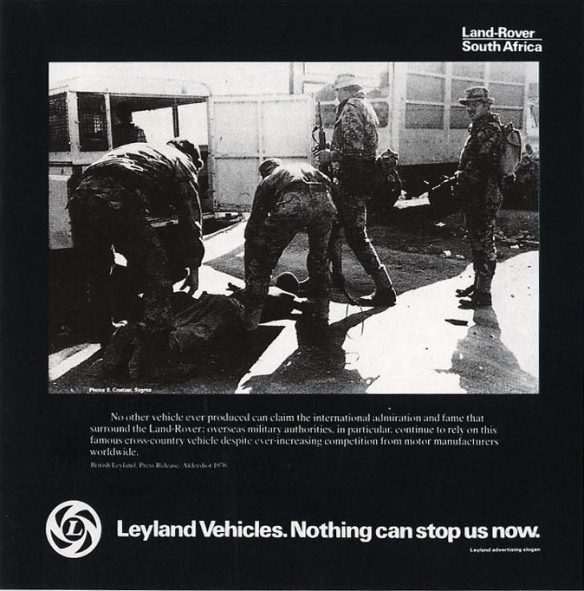
In 1978, Hans Haacke was commissioned to produce a new work for a solo exhibition at Modern Art Oxford. By this time, Haacke was known for an uncompromising body of work examining the relationships between art, politics and economic power.
His response was A Breed Apart (1978), a series of seven photo-collages investigating the apartheid connections of British Leyland, then Oxfordshire’s largest employer. The work juxtaposed images of racial violence, British Leyland vehicles and Jaguar advertising with quotations from corporate press releases, the United Nations and the UK parliament, suggesting the company’s complicity in systems that extended far beyond Britain.
The project extended beyond the gallery space. Trade union workers from the factory were invited to visit the exhibition, and A Breed Apart was also shown in a church hall near the plant in East Oxford. By situating the work within the local community, the exhibition connected global politics with everyday working life.
Haacke’s project demonstrated how art can be used to investigate and reveal the structures that shape society, making visible the links between local industry and international injustice.
Art can amplify lived voices
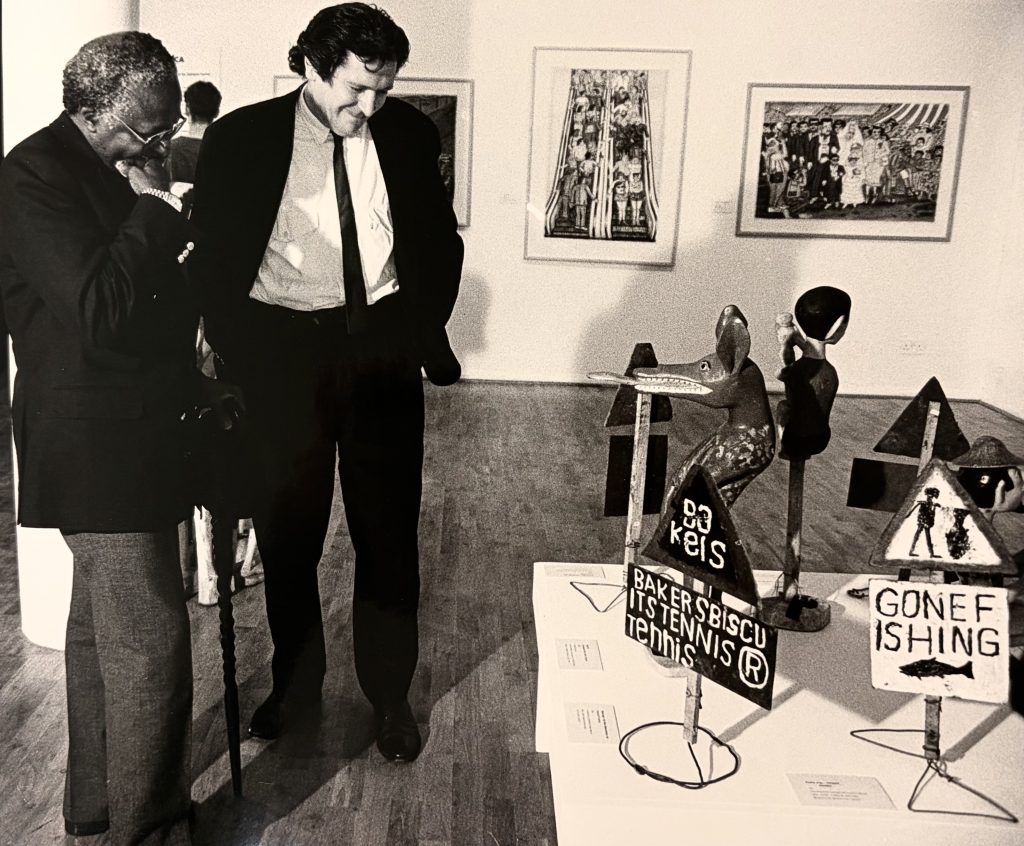
In 1990, as apartheid in South Africa began to unravel following the release of Nelson Mandela, Modern Art Oxford presented Art from South Africa, one of the most comprehensive exhibitions of South African art shown in Europe at the time.
The exhibition brought together artists from urban and rural communities, working across divisions that apartheid sought to enforce. Presented side by side, the works offered UK audiences a more complex and self-represented picture of South African life beyond the limited view available through international media due to the government of P. W. Botha restricting journalists and foreign media from reporting freely in South Africa.
During the exhibition, Desmond Tutu visited the gallery, connecting the exhibition to the wider global movement for justice. His presence was a reminder that the issues addressed in the artworks were part of an ongoing and urgent political reality.
Alongside the exhibition, four participating artists worked with young people to create painted murals at a local skateboard park. The project extended the ideas of the exhibition into the city, connecting local participants with artists whose work was shaped by protest, repression and resistance.
By bringing together artists, audiences and communities, Art from South Africa demonstrated how art can create space for voices shaped by lived experience and political struggle.
Art can humanise social crises
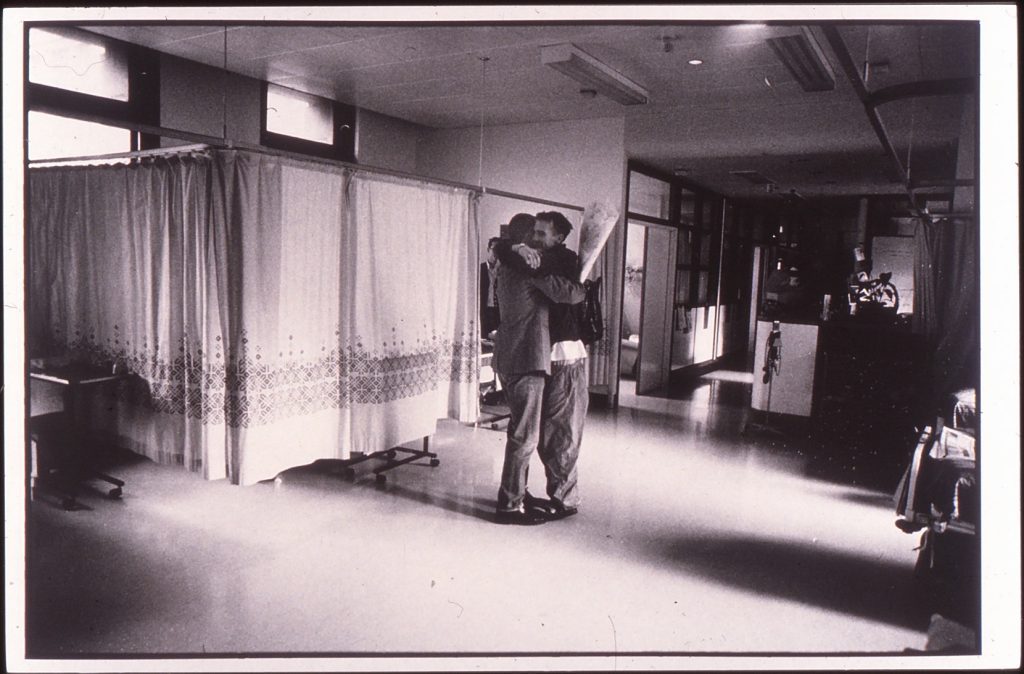
In 1994, as HIV and AIDS continued to shape lives across Europe, Modern Art Oxford presented Positive Lives: Responses to HIV, a touring photo-documentary exhibition developed in collaboration with the Terrence Higgins Trust and Network Photographers.
At a time when HIV and AIDS were widely misunderstood and heavily stigmatised, the exhibition centred personal testimony. Structured through the work of individual photographers, Positive Lives explored the experiences of partners, families and communities navigating care, grief and survival.
Where mainstream media often relied on fear and sensationalism, the exhibition offered nuance and dignity. By foregrounding lived experience, it created space for empathy and understanding while challenging misinformation and stigma.
Exhibitions like Positive Lives show how art can help people encounter complex social realities through individual stories, encouraging audiences to look more closely and listen more carefully.
Art can confront global threats
In 1998, Modern Art Oxford presented a major survey of Gustav Metzger, whose work insisted on the inseparability of art and politics.
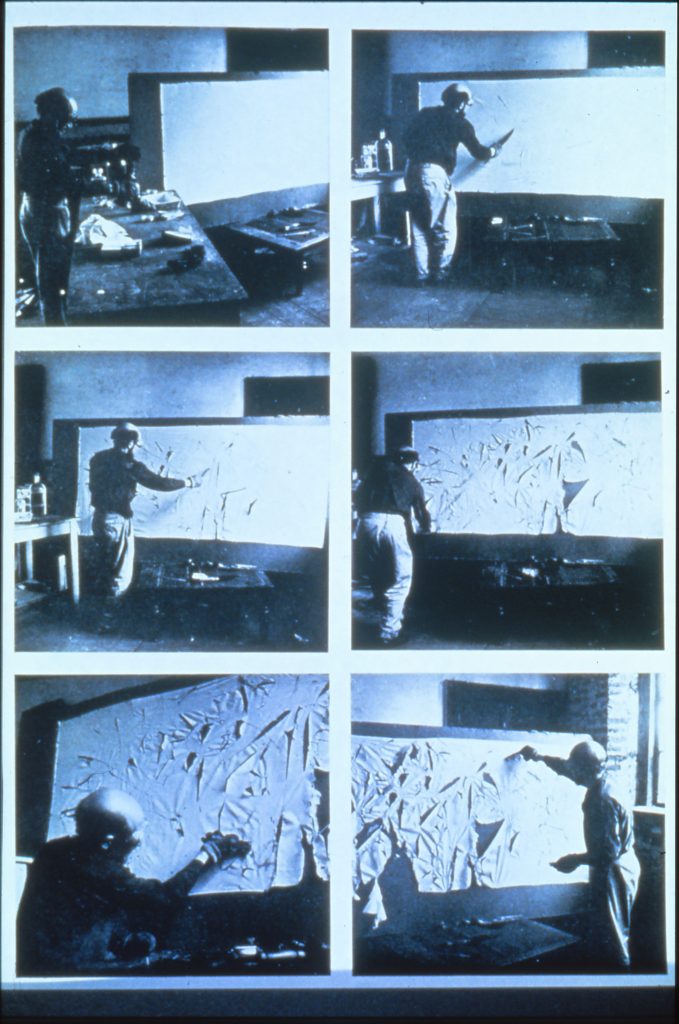
Responding to the nuclear threat and the destructive forces of technological development, Metzger developed the concept of auto-destructive art in the early 1960s. His works were designed to erode or disappear over time, reflecting the instability and danger of a world shaped by nuclear escalation and mass consumption.
Rather than producing static objects, Metzger’s work questioned whether art could confront the systems that normalise destruction in everyday life. His projects asked whether art could embody crisis, interrupt it, or refuse it altogether.
Presented at a time when nuclear anxiety had receded from public debate, the exhibition positioned Metzger’s ideas as part of an ongoing and urgent present.
Why art and society still matter
Across these exhibitions, a consistent thread emerges: art creates ways of seeing that extend beyond headlines and official narratives. It can expose hidden systems, centre lived experience and connect global events with local realities.
Today, as social and political challenges continue to shape everyday life, these histories remain relevant. They remind us that art is not separate from society, but part of the conversations that define it.
More than four decades on, Modern Art Oxford continues to work with artists whose practices reflect and question the world around them. Working with artists who understand that art can be a way of paying attention, creating dialogue and imagining change.