In April, I had the privilege of spending a month exploring Modern Art Oxford’s extensive archive, delving into the gallery’s history and learning about the wide range of events that the gallery has facilitated since it opened in late 1966. It was particularly exciting to research things that relate to Modern Art Oxford’s current summer exhibition, Movements for Staying Alive, some of which I have explored below.
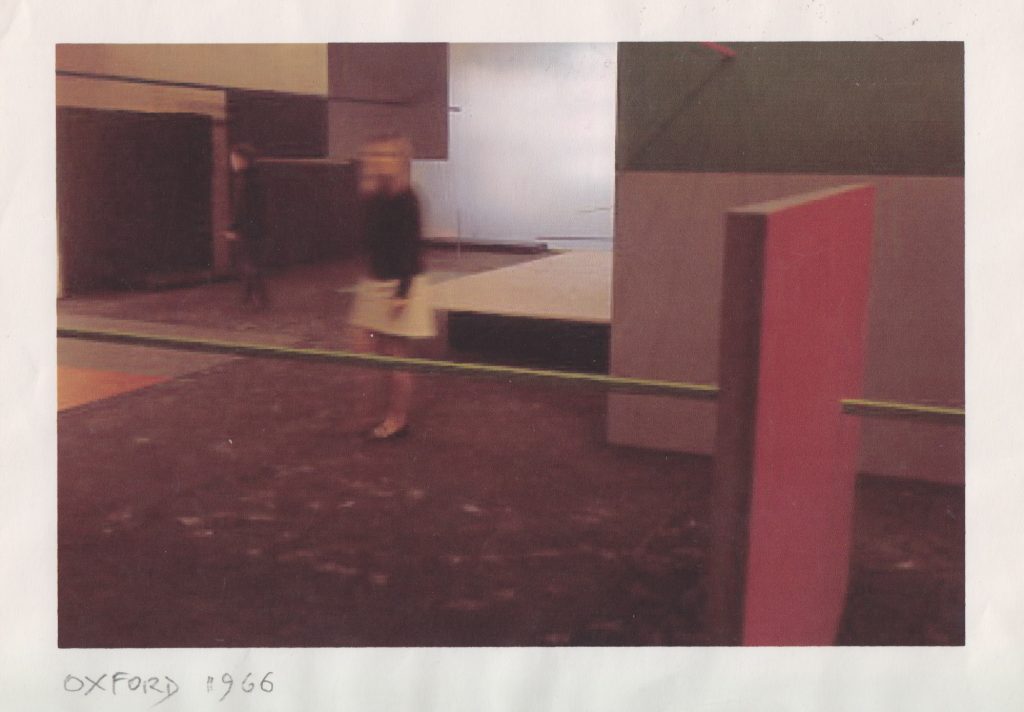
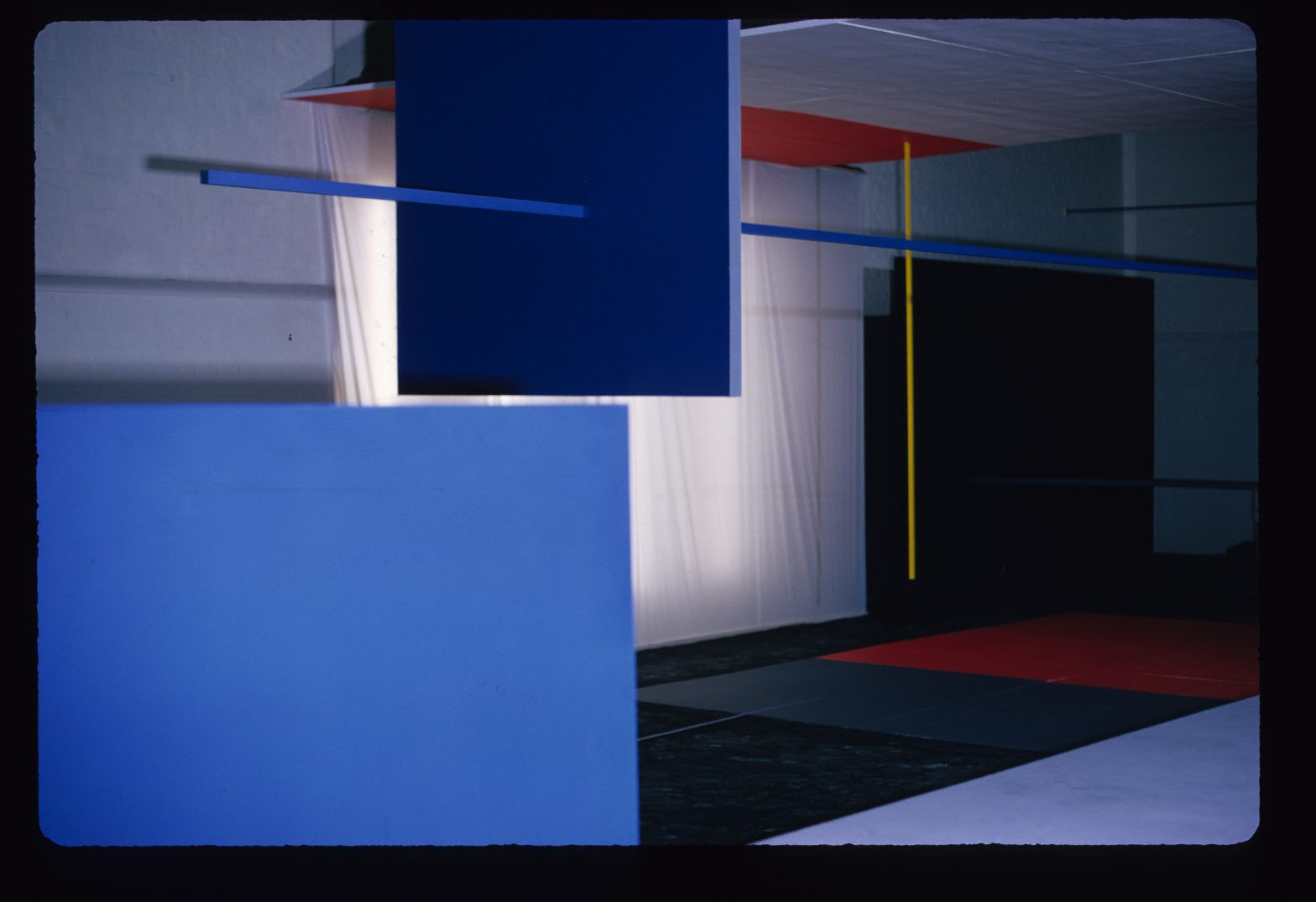
When Modern Art Oxford opened with the intention to house England’s first collection of Modern Art, the reclaimed brewery, (initially a temporary location), quickly became an alternative space for experimental exhibitions. Space-Place: Constructed Space Participation was Modern Art Oxford’s first self-generated exhibition. Much like the current exhibition, Movements for Staying Alive in 2025, Space-Place’s main intention was to incite further creativity, movement and noise. The gallery was filled with Maurice Agis and Peter Jones’ geometric constructions in primary hues. Large squares and long poles intersected to create an immersive and inviting installation. A taped soundtrack of ‘hoots and booms’ complimented the visual experience. Expressive mime and dance were strongly encouraged within the space. Children (and adults!) ran freely about, though unlike Movements for Staying Alive, the structures could not be played with due to unforeseen structural weakness. The exhibition witnessed a series of experimental artists and musicians including Yoko Ono, Adrian Mitchell and John Tilbury and a workshop where undergraduates spent the evening using spontaneous movement to explore their environment.

During the late 1980s, Modern Art Oxford was one of the few performance spaces open in Oxford and held one of the best dance floors, therefore the gallery hosted a particularly interesting series of experimental performances and workshops run alongside the gallery programme. The Dance/Sculpture series, focused on the relationship between dance and visual arts. In November – December 1987, artists Gaby Blacker and Kate Blacker undertook a 12-day residency at Modern Art Oxford directing daily Dance/Sculpture workshops based on the exhibition Balla: The Futurist. They worked with Balla’s ideas, deconstructing the dynamics of movement and using an art historical approach to sculpture. Students from the Henry Box School in, Witney and Didcot Girls’ School took part, as well as a group of physically disabled people from the Courtyard Day Centre, Bicester. The artists also ran an In-Service Training Day for teachers, a seminar with local dancers and artists, and a public performance at the gallery at the end of the residency focussed on Ballas’ visual formulations of light, noise, speed and cosmic movement.
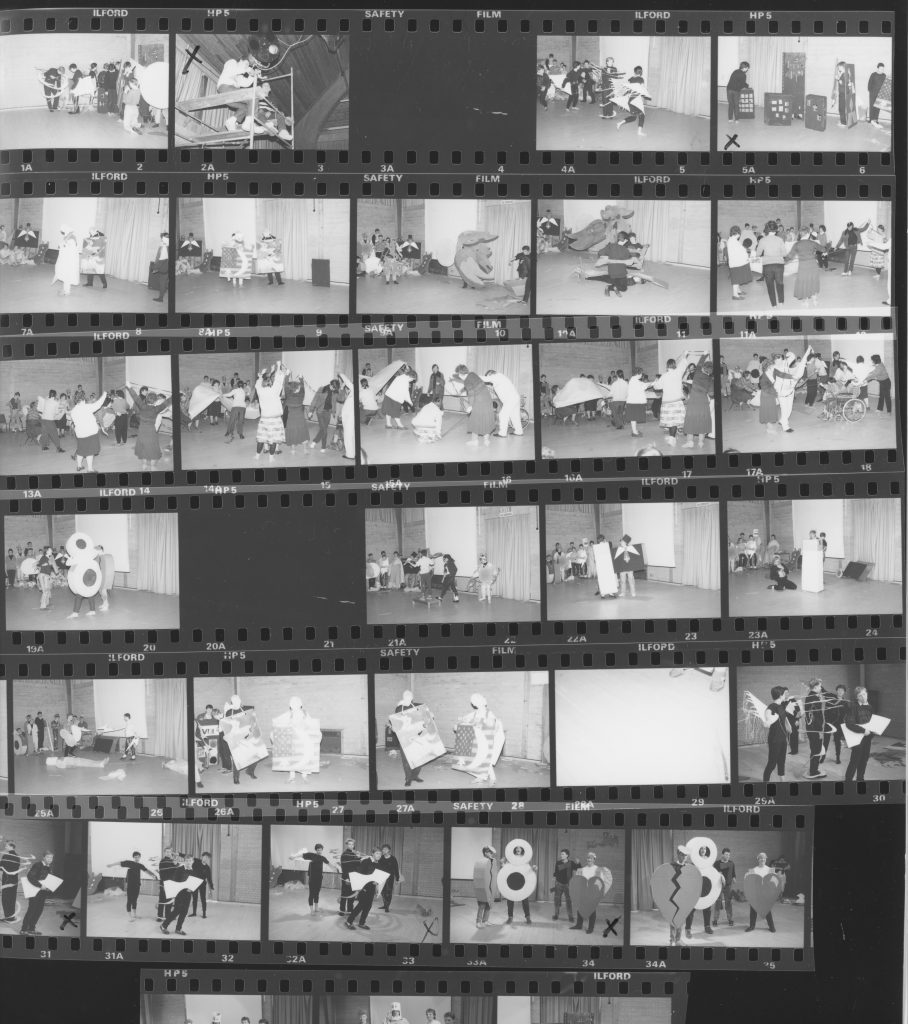
During my time at Modern Art Oxford I had the pleasure of meeting Cecilia Macfarlane who collaborated many times with Alan Franklin at Modern Art Oxford. We had a wonderful conversation about her experiences at MAO including Second Time Around, in March of 1989. Together, the artists undertook a 15-day residency in the gallery to explore the collaboration between dance and sculpture, pushing the boundaries to consider the prescriptive definitions of sculpture and dance. During the residency, a one-day workshop was held, with participants ranging in age from 14-65. Cecilia told me that each participant chose a piece of fabric or an item of clothing to use both asin a sculptural form and as a device for movement. The workshop demonstrated the exciting range of approaches for creative practice and the potential for the collaboration of the visual arts and dance.
Mia Annesen-Wood